

People always ask “why don’t we have more solar in AZ?”
The short answer is that there eventually will be, despite all efforts to keep it from happening.
While we watch technology redefine how we generate and store, we need to re-frame how we think about the topic.
We should see it as a personal freedom to harnessing the sun’s energy from our own roofs, tax free and unimpeded. Similarly, we should expect any power utility to use at least some of the money that we give them monthly to re-invest in things that increase our energy freedom.
Of course, just as with other liberties like freedom of speech or self-defense, energy liberty needs to be fairly balanced. We all need to support the grid, for instance, even if some of us don’t use it as much as others.
Here’s a short executive summary about why both solar energy advocates and utilities in Arizona may be thinking about this the wrong way.
In case you missed it, you are the executive in this executive summary. You busy little bee!
Impediments to Total Solar Saturation
1. The Duck Curve
When the sun in is the middle of the sky there is an excess of energy on the power grid because there are already a bunch of solar panels on our Arizona power system. Further, people are not at home drawing on as much power. When the sun goes down is exactly when people come home from work and turn up their A/Cs.
That’s a major shift to the system. So, out of fear that this will destabilize the grid, all of our Arizona utilities either resist new residential and business solar (Salt River Project, aka SRP) or continue to add fees for those who have it (APS, SRP and TEP).
For instance, APS has a grid access charge of $2.93/month for people who have solar panels on their roofs. SRP’s is over $12/mo. The grid access charge is the fee that you pay to have the privilege to connect to the grid when you have panels.
All utilities have been raising fees and charges over the last decade.
Oh and by the way, you can’t just disconnect from the grid and generate your own power. It is illegal in Arizona to do so if you live in an area where service is available.
2. Cost of solar + battery technology
Even though the cost of solar and batteries has been dropping dramatically over the last decade, there is still a significant up-front expense for the average home owner, school or business. The savings is definitely there, but the up-front money may not be.
Just a few months ago I priced out a battery bank to compliment my solar panels. I found it cost prohibitive to get enough batteries to back-up power for entire demand. Even though my home is super efficient and I have a heat pump rather than an A/C, the power from a standard battery bank would not last more than a couple hours.
Given that power outages don’t typically last that long, I’m willing to continue to rely on the grid for now.
3. Utility greed
Most utilities want to sell you electrons, and any effort to reduce how many of those they can sell will be met with resistance.
For instance, Arizona Public Service (APS) should be a service to the public, but it is a service to shareholders to the detriment of the public. Same with TEP.
SRP might be the exception. It is technically non-profit. However what most people think of as a power company is really just a side hustle to what SRP was originally designed to do —deliver reduced-cost water to farmers in their territory.
4. Lack of imagination
Many argue that the bureaucratic inertia of utilities and their engineers hold back your energy freedom as much as anything else.
It is easier and takes less time to plan for a new gas-fired power plant than it does to build a program to increase your energy freedom. More on that below.
“Summer is Coming”
Here’s the problem. Utilities either need to get more on board with supporting your energy freedom, or get left behind as technology advances.
This eye-opening chart shows you how quickly solar use is growing around the world.
Basically, it has taken 11 years for solar power to do what it took gas, coal and hydro-electricity between 40 and 60 years to do —grow in usage globally from 100 terawatt-hours to 2,000 TWh.
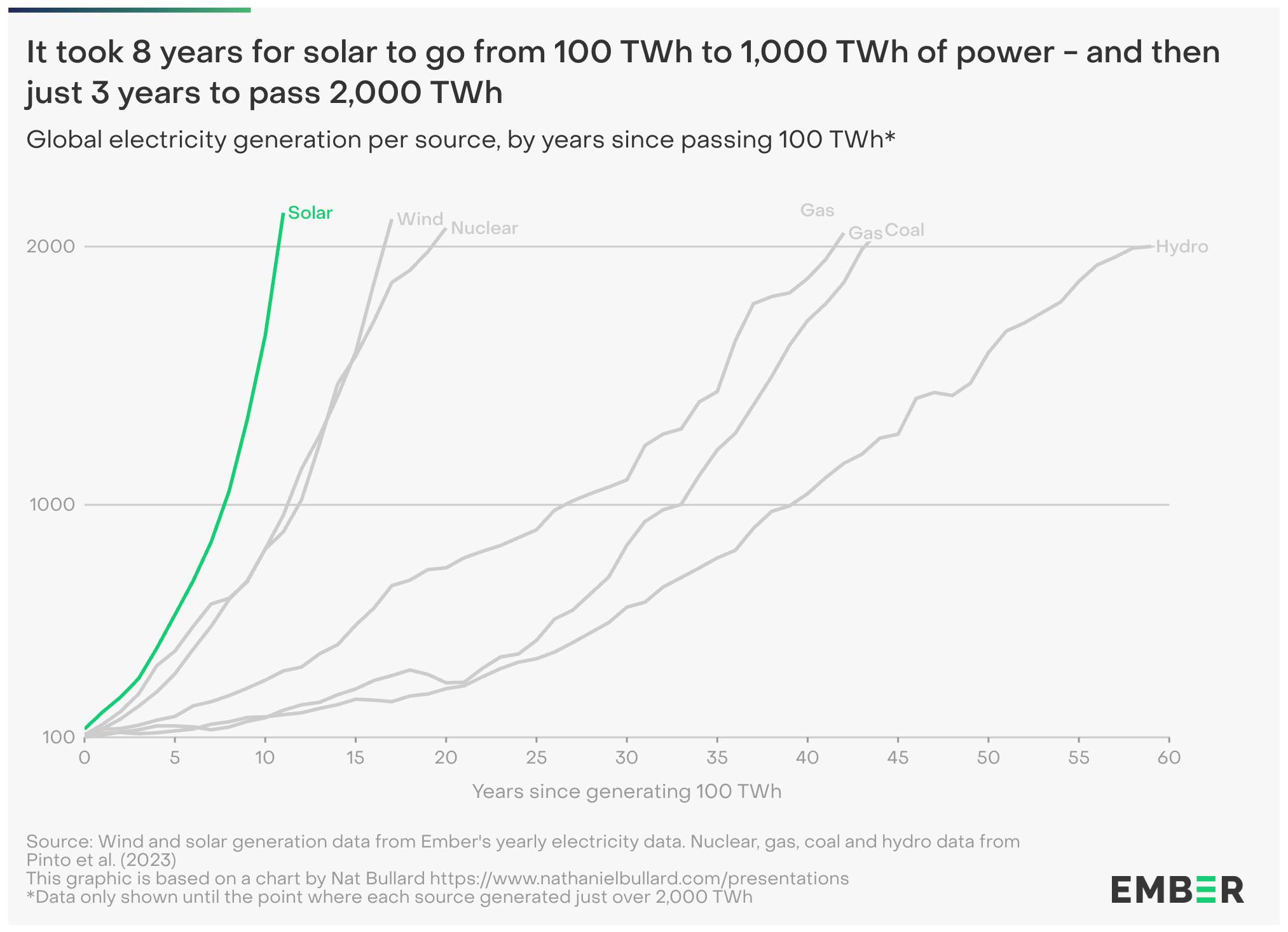
In other words, solar is coming, along with the entire clean energy sector, and we’d better start planning now.
Here’s a quick list of things utilities should be doing to get ready.
1. Dramatically increase what’s called “peaking infrastructure.”
That means updating local capacitors and substations and adding lots of local battery back-up to help reduce that dramatic duck curve power shift that I described above.
If we have more residential batteries on homes and businesses, and also situated with substations, then we can manage the shift in demand. The utilities usually use this necessary infrastructure upgrade as an excuse not to allow more distributed generation.
They say it is too expensive. But I believe they should be comparing the cost of improving this peaking infrastructure to the very real and very high cost of new methane gas power plants.
In other words, every dollar invested in peaking infrastructure saves many dollars committed to water-wasting, air polluting power plants. Every new power plant requires financing, like buying a home. It required buying land for the power plant, among other inescapable costs.
2. DSM + solar + batteries = cost savings.
Demand Side Management (DSM) refers to those programs that help you buy more energy efficient appliances, thermostats or insulation. The magic formula is to combine this with residential solar and batteries in a way that slows the over-all growth in demand for all of Arizona.
Why is that important? Simple. The less new demand is added to the system every year, the less expensive new power generation we all have to pay for.
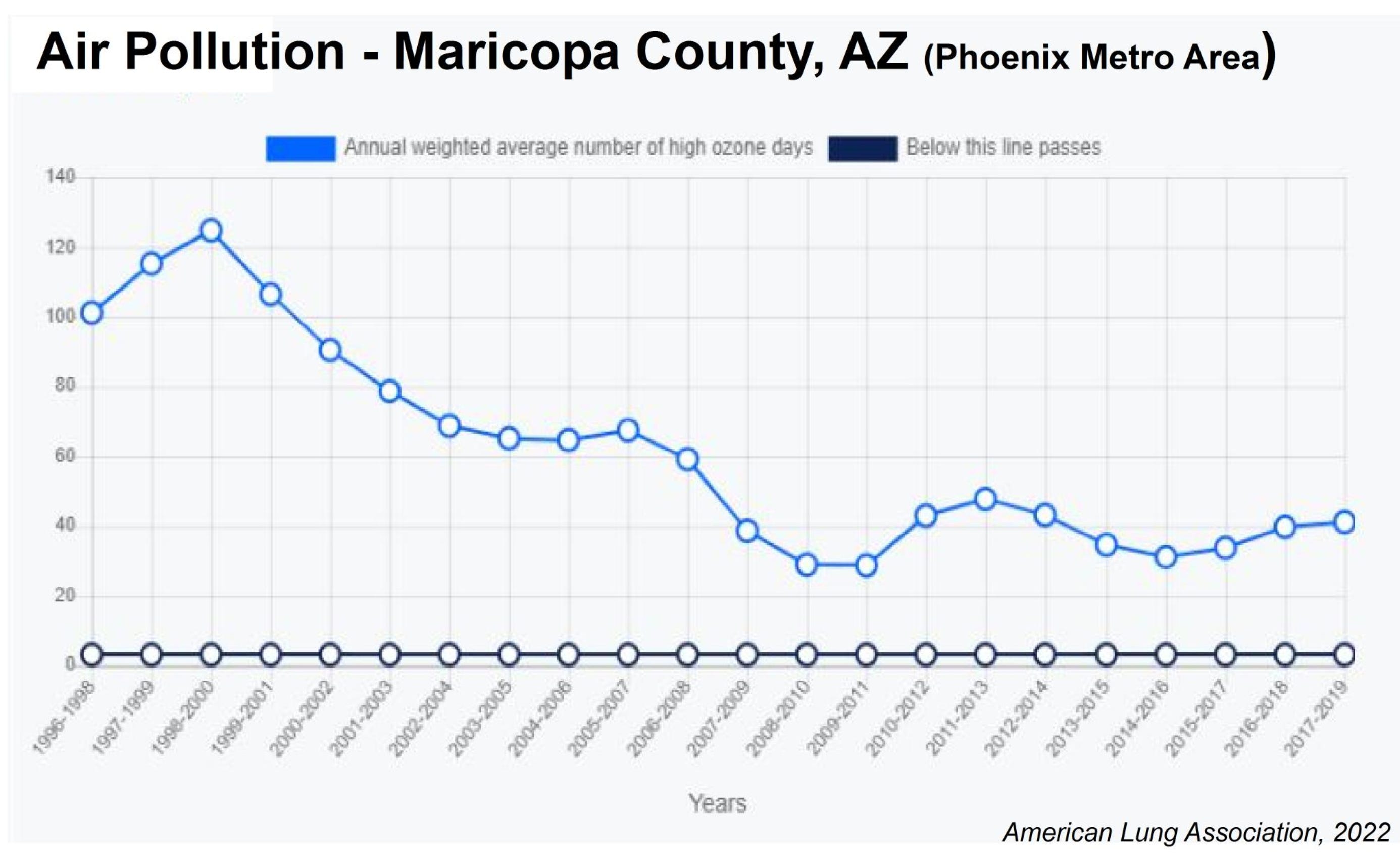
Right now utilities are responding to increasing demand by reflexively building new gas power plants. (There’s that lack of imagination again.) Those plants contribute to our already-terrible air quality, use water we don’t have and obligate us to 30+ years of buying methane gas to power them.
And every time some dictator on the other side of the world starts a new war, the cost of methane gas goes up.
3. “Virtual Power Plants”
This is a cool idea and one which SRP should get a little credit for starting to talk about —but they need to move faster and roll this out.
In short, if you sign up for a virtual power plant (VPP) program you get a huge discount from your utility on batteries for your home. In exchange, you agree to allow them to pull a little bit of power from that battery in the case of a brown-out or power disruption to their grid.
Where’s the freedom in that?
Well, for 99% of the year you save by having solar panels + batteries and for 1% of the year you help keep the grid from going down.
Look at you! You’re a hero!
There is a pilot program for this in Utah, that bastion of liberal environmentalists. Rocky Mountain Power, who created this program has around significantly higher saturation of solar residentially than SRP, for instance, closer to 5%.
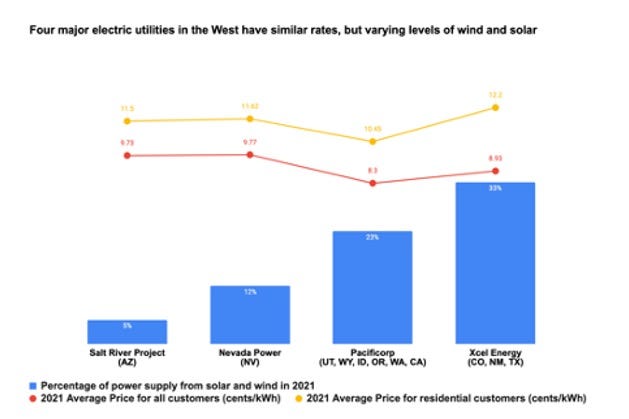
The free market is talking. Are we listening?
Change is inevitable.
Right now utilities are costing us more money, and obligating us to future costs, because they are resisting change.
An this is the key take-away. So look here.
Utilities resist solar panels, batteries and DSM because they say it costs some customers for others to take advantage of these programs.
In response, solar advocates point to some hard-to-defined benefits to the system.
What they both should do is compare the costs of DSM, batteries, customer solar and peaking infrastructure to the total lifetime costs of new gas power plants.
When we reduce demand while building a more resilient power infrastructure, we create a better environment for energy freedom, we can avoid the gas power plant trap. It’s money in the bank.
Solar and clean energy advocates should further help the utilities find ways to diversify their income streams away from just selling electrons. They should expand their options to the many services that save money for customers, clean the air and support freedom.
These services include installing and maintaining solar systems and batteries, upgrading insulation, and financing it all so more folks can pariticpate.
The only constant in life is change. Energy freedom is a better way to frame the conversation.
It is a simple equation:
Demand Side Management
+
Customer-side Solar
+
Batteries
=
Cost Savings and Reliability.